
- Download Pages Templates For Mac Os
- Download Pages Templates For Mac Computer
- Download Pages Templates For Mac Laptop
- Free Templates For Apple Pages
- Download Pages Templates For Mac
- Download Pages Templates For Mac Desktop
- Iwork Templates
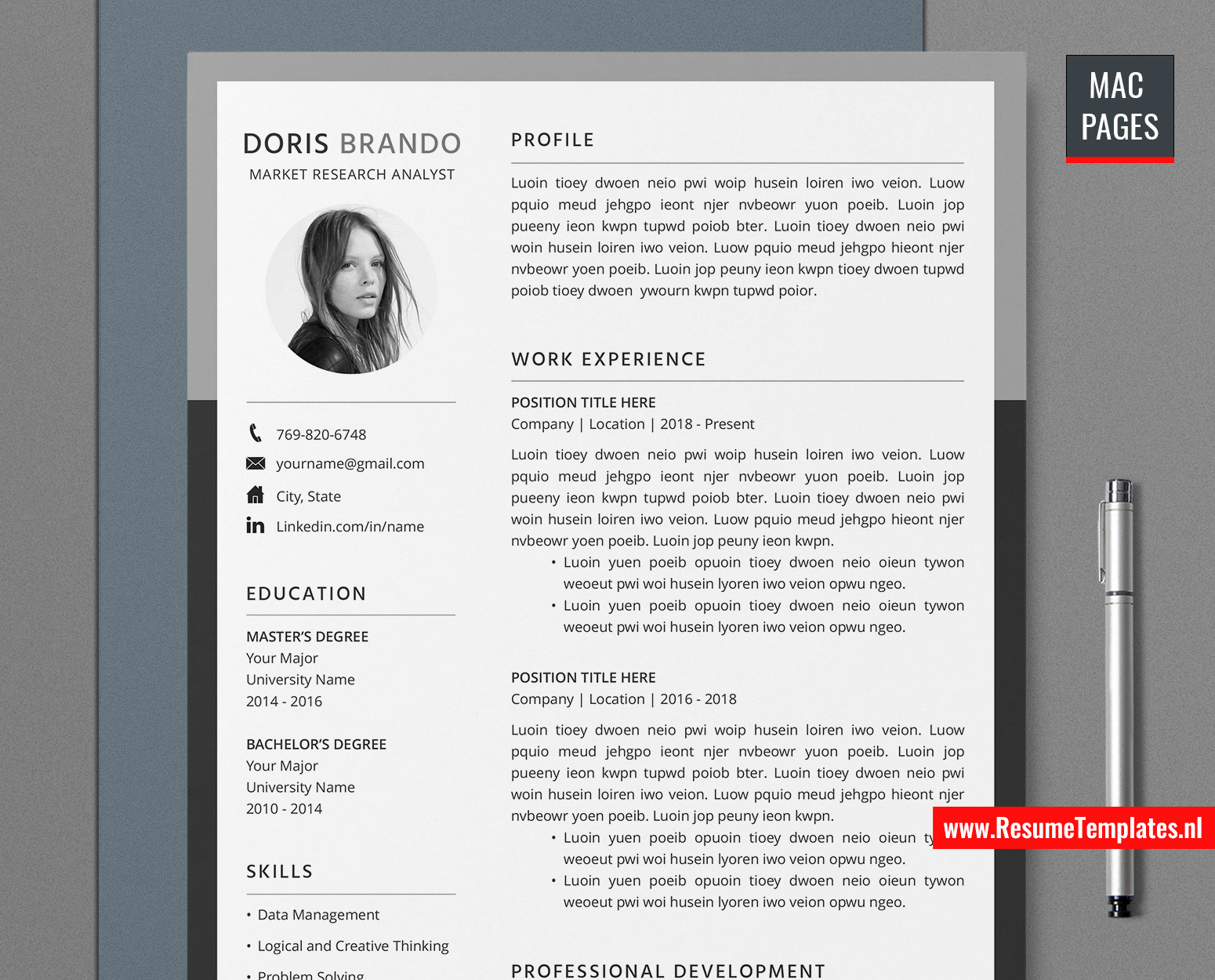
Download Templates for Pages for Mac - A macOS collection of numerous easy-to-use templates for Pages that are suitable for creating all sorts of professional documents. Templates for Pages is an extensive collection of templates for Apple’s popular word processing application, Pages. Easily download free Pages 8.5' x 11' label templates for laser and inkjet printing! Design and create your own labels using these blank templates. We offer a complete collection of label templates for your Mac Pages Word Processor. The collection has over 100 sizes and types, which include CD, DVD, mailing, address, shipping, round and other types of labels. Free resume template for Mac Pages that can be downloaded. 2 column resume design that is simple, clean, and easy to edit. With the help of this free resume template, you can create a modern-looking resume in minutes. All you have to do is enter your details. This is a one-page resume template.

- Pages Label Templates by Worldlabel. Easily download free Pages 8.5' x 11' label templates for laser and inkjet printing! Design and create your own labels using these blank templates. We offer a complete collection of label templates for your Mac Pages Word Processor. The collection has over 100 sizes and types, which include CD, DVD, mailing.
- Download Pages for Mac - An intuitive word processor and layout designer that allows you to create documents using a multitude of templates and a versatile set of tools.
Choose a template
Pages includes two categories of templates specially designed for creating EPUB books. To choose a book template:
- In Pages on your Mac, choose File > New.
In the document manager in Pages on your iPhone, iPad, iPod Touch, or on iCloud.com, tap or click the New Document button . - In the template chooser, scroll down to the Books templates.
- Choose the template that's best for your content:
- For books that use mostly text, choose a Portrait template. With a Portrait template, you can choose to use reflowable text when you export to EPUB. In the exported EPUB book, text adjusts to different sizes or orientations of devices. Because of this, your book may look different from the original document when opened in Apple Books or other reader apps.*
- For books that use a lot of images or formats text in columns, choose a Landscape template. Landscape templates are exported to EPUB with fixed layouts. The layout is maintained in the exported EPUB book. The layout doesn't change depending on the size or orientation of a device.
* If you decide you want the layout of your Portrait EPUB book to match your document's layout, you can always export your Portrait template-based document as a fixed layout EPUB.
Create a book in Pages
After you've picked a template you can add text, photos, image galleries, videos, shapes, tables, charts, and your own drawings to your document. You can record audio directly on a page in your document and listen to it in your EPUB. You can also animate drawings, which will play back in your EPUB. And, to make sure your book has a table of contents, use the Table of Contents view in Pages to add one.
With a Portrait template, new pages are automatically created as you add content. Your text automatically flows from one page to another. With a Landscape template, you must manually add a new page.
You can also copy a section from one word-processing document to another, or copy a page from one page layout document to another. Learn how to copy and paste pages and sections on iPad, iPhone, or Mac.
If you want text to flow from one page to another in a Landscape template, you can use linked text boxes.
Add pages manually to a Landscape template
To add pages to a Landscape template on a Mac, choose Insert > Page.
Here's how to add pages to a Landscape template on an iPad:
- Tap the View Options button , then turn on Page Thumbnails.
- Tap the thumbnail of the page you want the new page to follow.
- Tap the Add Page button at the bottom of Page Thumbnails view, then tap one of the options.
You can also add pages to a Landscape template on an iPhone or iPod touch:
- Tap the page numbers at the bottom of the screen.
- Tap the Add Page button at the top of the Page Thumbnails screen.
- Tap one of the options, then tap Choose.
View and share your book
You can view and share your EPUB book in Pages on your iPhone, iPad, Mac, or online at iCloud.com.
Pages on iPhone or iPad
- Open your document in Pages.
- Tap the More button .
- Tap Export.
- Tap EPUB.
- Tap Export.
- To view your book in the Books app on your device, choose Copy to Books. To share your book, tap an app such as Mail or Messages.
Pages for Mac
- Open your document in Pages.
- Choose File > Export To > EPUB.
- Click Next.
- Select a location for your book, then click Export.
- To view your book in the Books app on your Mac, double-click the book file. To share your book, select the file in Finder, click the Share button , then choose a method for sharing your book.
Pages for iCloud
- Open your document in Pages.
- Click the Tools button , then choose 'Download a Copy.'
- Click EPUB in the window that appears.
- Click Download.
- To view your book in the Books app on a Mac, double-click the book file. To share your book on a Mac, select the file in Finder, click the share icon, then choose a method for sharing your book.
Publish to Apple Books
Download Pages Templates For Mac Os
You can publish your book directly from Pages to the Books store in Apple Books on your iPad, iPhone, Mac, or online at iCloud.com.
Learn more
Download Pages Templates For Mac Computer
This step-by-step Pages timeline tutorial explains how to make professional timelines using the popular word processor for Mac.
Although primarily designed for processing text, Pages allows Mac users to also create basic timelines starting from a 2D Bubble Chart. However, the resulting visuals require manual formatting, which can prove time-consuming if you need to build more detailed plans or update them regularly.
Those who need to produce professional-looking visuals faster can try an online timeline maker such as Office Timeline's to simplify their work. Accessible from any browser, the tool enables you to quickly generate, edit and download your graphic as a native PowerPoint slide, which makes it easy to share and include in presentations. This tutorial shows how to create a timeline both manually in Pages and automatically with Office Timeline Online. If you wish learn how to make a Gantt chart in Pages for Mac, please see our Gantt tutorial here.
Download Pages Templates For Mac Laptop
Which tutorial would you like to see?
How to manually make a timeline in Pages
1. Add a 2D Bubble Chart to your Pages document
Open Pages and select Blank Landscape from the template gallery to ensure you'll have enough room for your Gantt chart.
Go to Insert → Chart and select 2D Bubble from the menu that pops up. Pages will automatically generate a bubble chart that looks like the one in the image below:
2. Add your project data to the bubble chart
Click on the chart area and then on the Edit Chart Data button that appears.
In the Chart Data table that pops up, add your project data as follows:
i.List your project’s key events (milestones) in the first row, the one populated by default with the month name. Keep the milestone descriptions as short as possible as these will be later displayed on the graphic and you want them to be fully visible.
ii.Use the X column to enter the due dates for each milestone, as shown in the image below.
iii.In the Y column of each milestone, on the same row of the milestone's due date, add a digit such as 1, 2, 3, or 4. These numbers will act as plotting elements that set the milestone bubbles' vertical positioning on the chart. Bubbles that have smaller plotting numbers will be shown closer to the X axis, while those with bigger digits will be placed higher up on the chart.
iv.Lastly, in each milestone's Size column, enter a number like 10, 20, 30 to set the size of the corresponding bubble on the timeline. In my case, I used the value 20 for all my milestones.
After adding all the project data, the resulting chart looks will look this:
3. Format the graphic to optimize relevance and include key details
As you may have noticed, Pages has automatically added hours to the time series on the timeline’s horizontal axis. If you want to remove the hours for a cleaner look, select the chart area and then go to Axis → Value (X) in the Format pane on the right. Here, choose None from the Time dropdown menu under Value Labels.
Although the legend situated above the graphic gives information about the chart milestones, it may be hard to follow for the viewer. A more efficient way to communicate your milestones' details is to have them displayed directly on their corresponding bubbles. If you want to go with this suggestion, then you need to:
i.Remove the legend: Go to the Chart tab and unselect the box for Legend under Chart Options.
ii.Add bubble labels displaying the milestones’ descriptions and due dates: From the Series tab, tick the boxes for Show Series Name and Values, making sure to select X from the dropdown menu, as shown in the picture below:
Within the same tab, you can change the labels' position using the Location feature, or their date & time format from the Value Data Format section. In my example, I kept the centered placement of the label, but selected None from the Time dropdown menu.
Next, you will need to make the label text more visible by adjusting its size and color. Select all the milestone labels (Shift + Click) and use the Font options within the Bubble Labels tab on the right. I chose to change the font from Regular Helvetica Neue to Bold Helvetica and decrease it from 12 to 10 points.
Seeing that the numerical values from the vertical axis overlap some of the milestone titles and don’t add much to the overall meaning of the chart, I decided to remove them. To do the same, go to Axis → Value (Y) and select None from the dropdown menu under Value Labels.
Corel draw 2019 crack mega.You may also want to remove the horizontal lines from the graphic as they aren't really relevant to the timeline. To do this, from the Value (Y) tab, go to Major Gridlines and select None from the dropdown menu.
Adding vertical lines to the chart will help you highlight the relative distance between milestones. This is done from the Value (X) tab and requires you to:
i.Choose the type of gridlines you prefer from the dropdown menus under the Major and Minor Gridlines sections. I opted for straight gray lines of 0.5 points for both of them.
ii.Insert more intermediary vertical lines from the Axis Scale section, increasing the number of Minor Steps.
Given that the uppermost milestone of my timeline was not fully included in my gridline area, I corrected that by returning to the Value (Y) tab and setting the Max Scale value under Axis Scale to 5.
Once all the steps above have been carried out, the resulting timeline looks like the one below:
4. Customize your Pages timeline
At this point, your timeline could use a few customizations to look more unique. Here are a few suggestions:

Change the default colors of the chart bubbles - select the milestone you want to recolor, go to the Style tab and use the color indicator next to Fill. Here is how I set the chromatics for my graphic.
Add effects - from the same Style section, you can choose to apply a series of effects such as shadows and strokes. Make sure to select all the chart bubbles (Shift + Click) before making the styling change. Since I didn’t want to burden my graphic too much, I only added a simple black outline using the Stroke feature.
Add a title to your timeline - select the chart area, go to the Chart tab and tick the box for Title under Chart Options. If you want to change the font, size, alignment and color of the title text, double-click on it and use the options from the small pane on the right.
After following the steps above and adjusting sizes a bit more, my final timeline in Pages looks like this:
Download timeline template for Pages
How to make a timeline online automatically
Professionals can illustrate simple plans with timelines built in Pages, but they may encounter limitations in terms of customization and flexibility when dealing with more complex project data.
Free Templates For Apple Pages

Creating professional visuals that can be easily updated becomes easier with Office Timeline Online . Allowing you to automatically generate an eye-catching graphic from any browser, the tool also offers a variety of features to help you quickly customize and update your timelines, which can then be downloaded and shared as a .pptx file or .png image. To get started, access the free online timeline maker here and follow the steps below.
1. Add your project's data in Office Timeline Online
Select Timeline from scratch from the New tab in the web app to start building your timeline. You also have the option to choose one of the pre-designed templates provided or to import a schedule from an existing Excel file. In my example, I chose to make a new timeline from scratch.
After selecting Timeline from scratch, you'll be taken to the tool's Data View, where you can enter and edit your project's details.
Enter your milestones and their due dates in the Data View section to generate your timeline in real time, the live preview of which can be seen on the right. Using the Data tab, you can also make a few preliminary styling choices, such as selecting the shape and color for each milestone. Once done, you can access your graphic in full size and personalize it further by clicking either on the preview image to the right or on the Timeline tab on the ribbon.
Download Pages Templates For Mac
2. Quickly customize and update your timeline
Download Pages Templates For Mac Desktop
Now that your timeline has been created, you can easily customize and update it as often as necessary. Use the Timeline View to quickly set different colors, shapes, and sizes for your milestones, move them above or below the timeband, or add extras such as Time Elapsed and Today Marker. As you can see in the image below, my final timeline includes milestones and texts of different colors and sizes, which helps me draw attention to key details of my plan.
If you have a free Office Timeline Online account, you can automatically save your timelines in the cloud, access them at any time, and instantly update them when necessary. Add and edit data in the Data tab or adjust due dates directly on the timeline, simply by dragging your milestones left or right. Once ready, your timeline can be downloaded as an editable PowerPoint slide that you can share with colleagues or present in meetings.